June 4, 2026
Diagnostics, Dogs, and Drug Discovery: What Recent Deals Say About the New Longevity Thesis
The longevity market is no longer funded as one clean category. That may be a good thing. The strongest recent deal signals do not say that investors have become uniformly bullish on anti-aging. They say something more specific: capital is still available when longevity can be translated into a business model, a regulatory path, or a data asset that investors already know how to evaluate. The new thesis is less poetic than the old one, but more durable. Longevity is getting funded when it looks like diagnostics, animal-health therapeutics, or drug discovery infrastructure.
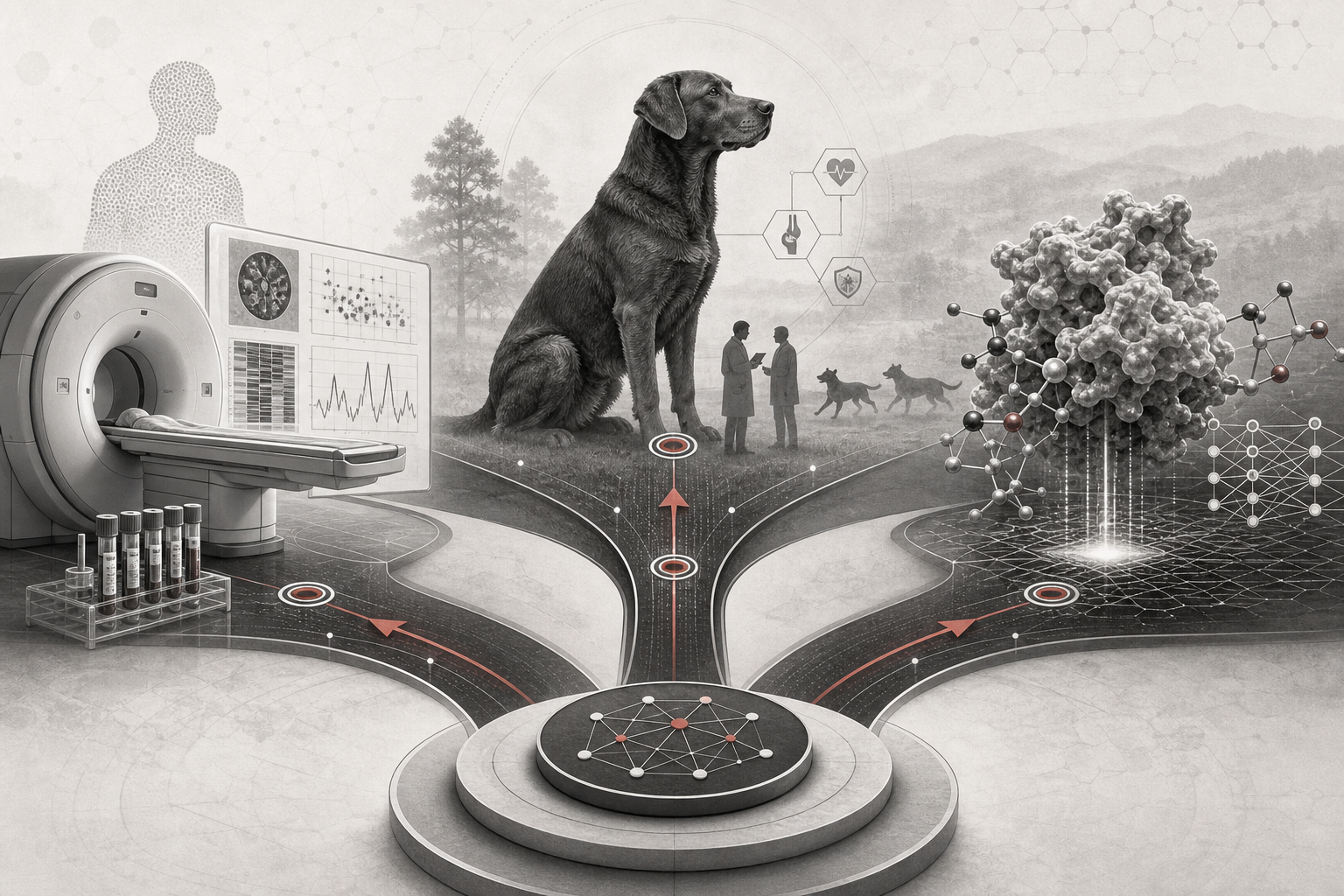
That shift is visible in the companies that keep attracting attention. Neko Health’s million Series B in January 2025 framed prevention as a scalable scanning and data relationship. Function’s million Series B at a reported .5 billion valuation pushed a similar idea through lab testing, imaging access, and medical intelligence. Loyal’s FDA milestones show why companion-animal longevity has become more than a curiosity. And AI-enabled discovery platforms continue to argue that aging biology can be made tractable through better data, models, and experimental loops. These are different lanes, but they share one trait: they make the longevity thesis measurable.
Diagnostics turn longevity into a repeat customer relationship
The diagnostics lane is attractive because it turns abstract prevention into a product people can buy now. Neko’s round came with numbers that are easy for investors to understand: 10,000 scans completed, more than 100,000 people on the waiting list, and an 80 percent rebooking/prepayment rate after the appointment, according to the company. Whether every scan ultimately changes clinical outcomes is still a harder question. But commercially, the model is legible. It creates repeat visits, longitudinal data, physician interpretation, and a premium preventive-health experience.
Function is a different version of the same investment logic. Its membership model starts with a large lab panel and expands into imaging and AI-assisted interpretation. The company is not selling one drug or one clock. It is trying to become the interface through which consumers collect, understand, and revisit their health data. That is why diagnostics are not merely a scientific tool in longevity. They are becoming an organizing business model.
Dogs make the regulatory problem more concrete
Loyal is important because it makes the regulatory question unusually explicit. In February 2025, the company said LOY-002 received FDA acceptance for reasonable expectation of efficacy for a senior-dog longevity programme. In January 2026, Loyal said FDA’s Center for Veterinary Medicine had accepted the Target Animal Safety section for LOY-002. The details matter less than the structure: a lifespan-extension claim is being pushed through a defined regulatory process in a species where the endpoint is more practical than in humans.
That does not mean canine longevity will translate directly to human longevity. It should not be oversold that way. But it gives investors something the human market often lacks: a clearer route from biology to approval milestone. In a field where aging is still not an ordinary disease indication, that matters. The dog market has become a test case for whether lifespan-extension therapeutics can be evaluated without relying entirely on speculative human-healthspan narratives.
Drug discovery platforms still need biological humility
The third lane is platform discovery: AI, high-throughput screening, omics, causal biology, and computational models aimed at finding interventions for aging pathways. This is the most ambitious lane, and also the easiest to overstate. AI can identify candidates, reveal patterns, and compress parts of discovery. But aging is not a single target. It is a network of mechanisms, tissues, exposures, and disease contexts. A platform claim is only as strong as the experimental loop that tests it.
That is why investors appear to prefer platforms with validation discipline. The strongest pitch is not that AI will solve aging in one leap. It is that a platform can generate testable hypotheses, prioritize interventions, run experiments, and move credible candidates toward disease-relevant endpoints. The platform has to become a machine for falsification, not just a machine for slides.
The new thesis is infrastructure before immortality
Put the three lanes together and a pattern emerges. Diagnostics create longitudinal data and customer relationships. Dogs create a more concrete lifespan-therapeutic regulatory path. Drug discovery platforms create a route from aging biology to candidate generation. None of these proves that the field is close to dramatically extending human lifespan. But each makes longevity less vague.
That is the new longevity thesis. The investable version of the sector is not a single promise to defeat aging. It is a set of infrastructures that make aging biology, prevention, and intervention more measurable. The market may still use the language of healthspan, but the money is moving toward businesses that can show what gets measured, what gets tested, what gets regulated, and what someone is willing to pay for.
What the deals do not say
The danger is reading too much into these deals. A large diagnostics round does not prove clinical utility. A canine regulatory milestone does not prove human translation. An AI platform does not prove a drug candidate will survive biology, toxicity, or trials. Longevity remains a hard field, and recent funding does not remove the need for endpoints, replication, and patient-relevant outcomes.
But the deals do say that the category is maturing. Capital is no longer only chasing the broad claim that aging is important. It is looking for narrower wedges where that importance can become a product, a dataset, a trial, or a regulator-facing programme. That may be less dramatic than the original longevity pitch. It is also much more interesting.